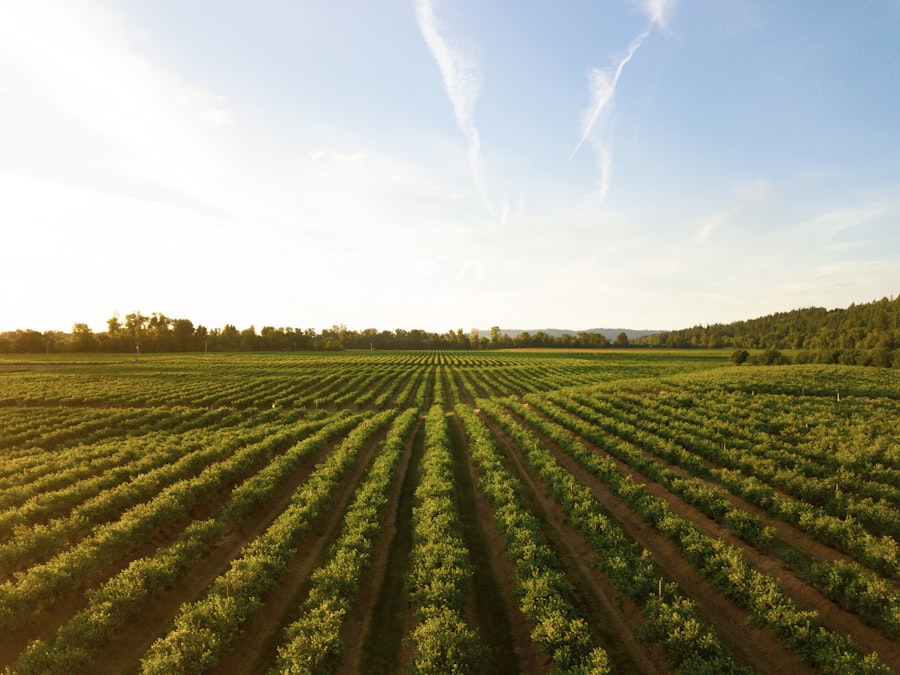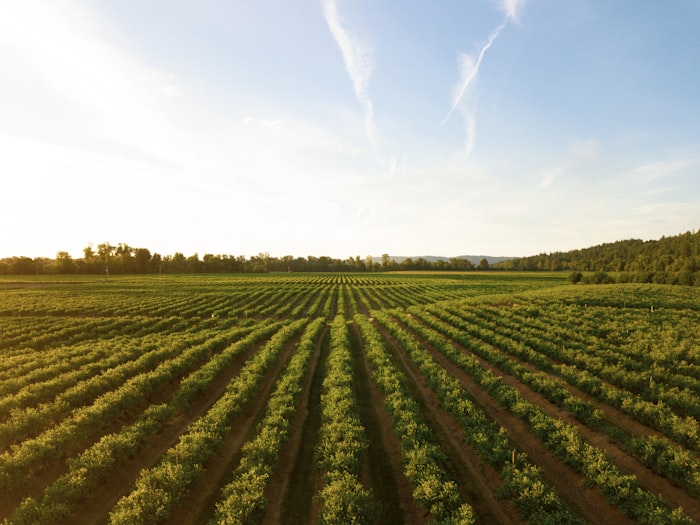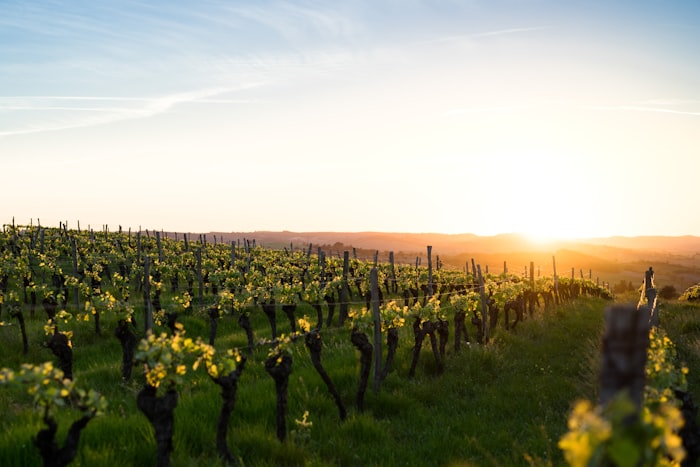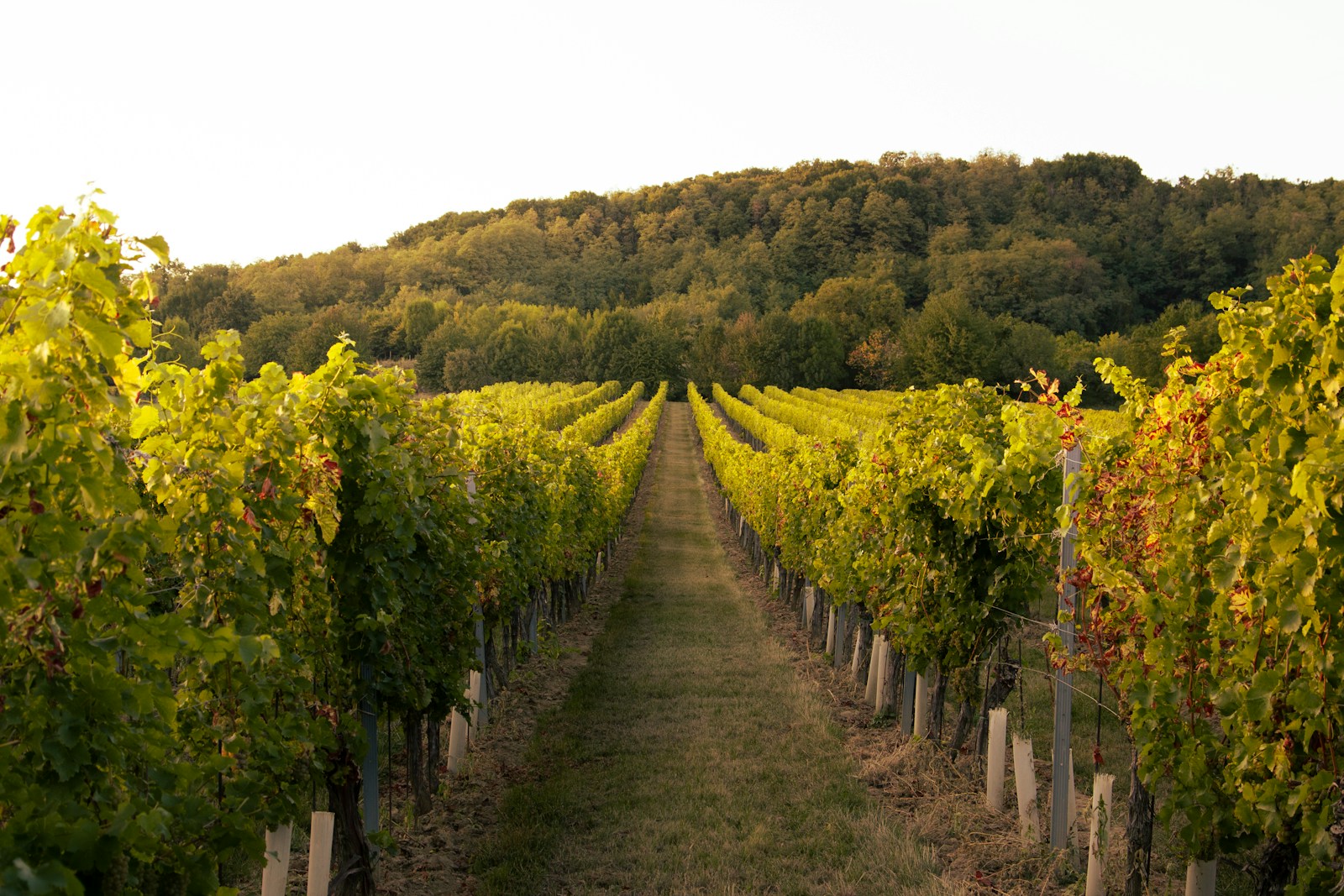
Over 1,100 vineyards. 4,841 hectares. A Blanc de Blancs that beat Champagne at its own competition for the first time in thirty-four years. This is English wine — and it is no longer making apologies.
2025 IWC Champion Sparkling Wine: Nyetimber's Blanc de Blancs 2016 Magnum — the first non-Champagne wine to win in the competition's 34-year history. Read the story →
From the chalk South Downs to the Atlantic-washed valleys of Cornwall — England's wine regions each deliver a distinct terroir. The geology is serious. The wines increasingly are, too.
The Heart of English Wine
The Garden of England Uncorked
Chalk, Flint & Exceptional Fizz
Vines an Hour from London
Atlantic Vines at England's Edge
English Wine's Expanding Frontier
In May 2025, the International Wine Challenge awarded its Champion Sparkling Wine trophy to Nyetimber's Blanc de Blancs 2016 Magnum — the first time in the competition's thirty-four year history that the prize had gone to a wine made outside Champagne. The judges scored it 97 points. It beat every Champagne house in the world. It was not a surprise to those who had been paying attention. It was a confirmation of something that England's finest winemakers had been building toward for three decades.
Independent reviews based on the wines, the visitor experience, the setting, and the value. No sponsored content disguised as editorial. No exceptions.
Nyetimber is the estate that changed everything. Their 1992 Blanc de Blancs beat Champagne at international competition and permanently altered how the world pe…
The family estate that first put English sparkling wine on international scoreboards. Simon Roberts produces a range of London-named cuvées from South Downs cha…
England's largest and most commercially visible winery, with 1,000 acres across Kent. The visitor facilities at Tenterden are the finest in English wine, and th…
England's most celebrated non-southern producer. The Cornwall Brut wins trophies that Sussex estates covet, and the Darnibole Bacchus is the finest expression o…
The geological argument is won. The blind tasting argument is won. What remains is the cultural argument — and that, too, is progressing faster than most people realise. A Master of Wine's guide to what the comparison actually means.
Read the GuideFrom a Sunday afternoon at a Surrey estate to a long weekend harvest volunteering in Sussex — how to visit English wine country on your own terms.
What to book in advance, when to go, how to get there, and what to expect at different types of estate — from boutique family farms to England's great wine tourism destinations.
Read the guide →Nyetimber's seasonal open days in a 15th-century barn. Rathfinny's harvest experience overlooking the Channel. Chapel Down's walking wine tour. Our definitive ranked list.
See all tours →English Wine Week. The Hampshire Fizz Fest. The Wine Garden of England Festival at Chilham Castle. Your annual calendar of unmissable English wine events.
View calendar →The best cellar doors, specialist retailers, and online shops for English wine. Including Waitrose Cellar, Majestic, The English Vine, Swig, and direct-from-the-vineyard options.
Explore retailers →Fifteen bottles that prove the geological argument is won. From Nyetimber's benchmark Classic Cuvée to Sugrue's cult bottling, ranked, tasted and explained.
Read the guide →The best English vineyards for a day trip from London, with train times, tour prices, and how to plan the perfect vineyard visit without a car.
Plan your trip →Five routes through England's wine regions: the Sussex Downs, Kent, Hampshire, and a week-long Grand Tour. With restaurants, accommodation and costs.
Explore trails →At the top level, yes. The South Downs chalk is the same geological formation as Champagne, the same grape varieties are used, and the traditional method winemaking is identical. Wines from Nyetimber, Gusbourne, and Ridgeview regularly beat established Champagne houses in blind tastings conducted by Master of Wine panels. The honest answer is that in exceptional English vintages — 2018, 2014, 2009 — the finest English sparkling wines are indistinguishable from Grand Cru Champagne in carefully conducted blind conditions.
Harvest season — late September through October — is the most atmospheric time to visit, when the winery is in full production and many estates offer harvest volunteering experiences. That said, the growing season from June through August is beautiful for vineyard walks, and tastings are available year-round at most estates. Spring (April–May) offers the pleasure of seeing bud-break and the vineyard awakening, which winemakers often say is the most optimistic moment of the year.
For sparkling wine, the dominant varieties are Chardonnay, Pinot Noir, and Pinot Meunier — the same trio used in Champagne. For still wines, Bacchus (a German crossing of Silvaner, Riesling and Müller-Thurgau) has become England's signature white variety, producing aromatic, herbaceous wines. Other notable still varieties include Ortega, Madeleine Angevine, Pinot Gris, and increasingly Chardonnay for still whites. Red wines are possible — Pinot Noir and Dornfelder are the most successful — but England's marginal climate makes consistency a challenge.
England now has over 900 vineyards across approximately 4,000 hectares. WineGB, the trade association for English and Welsh wine, reports that production has increased fourfold in the past fifteen years. The vast majority of vineyards are in the South East — Sussex, Kent, Hampshire and Surrey — but significant producers now exist in Cornwall, Devon, East Anglia, Wales, and as far north as Yorkshire.
Monthly: the best new vintages, vineyard news, cellar door openings, and harvest reports — written by people who actually know their terroir from their tourist board.